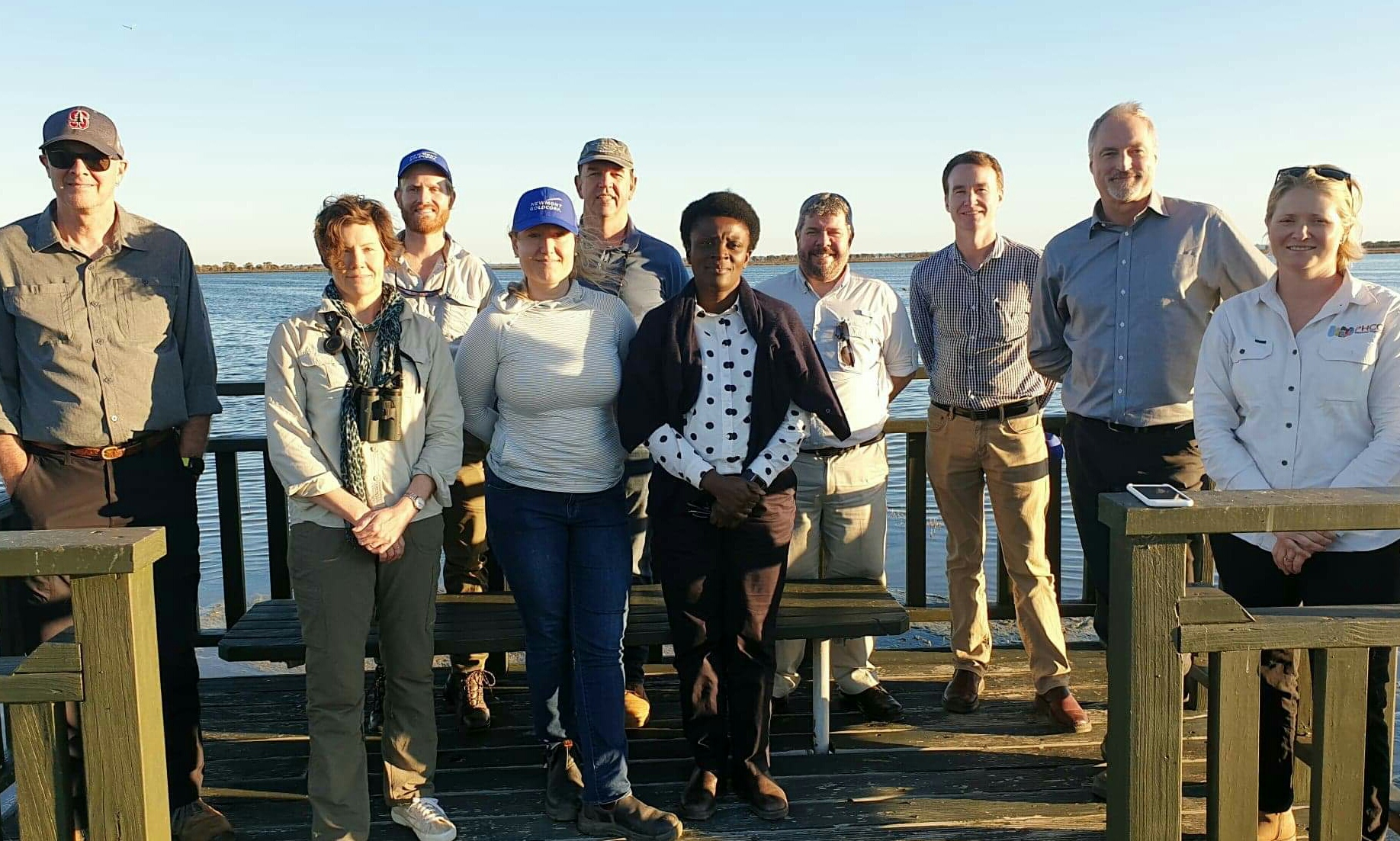


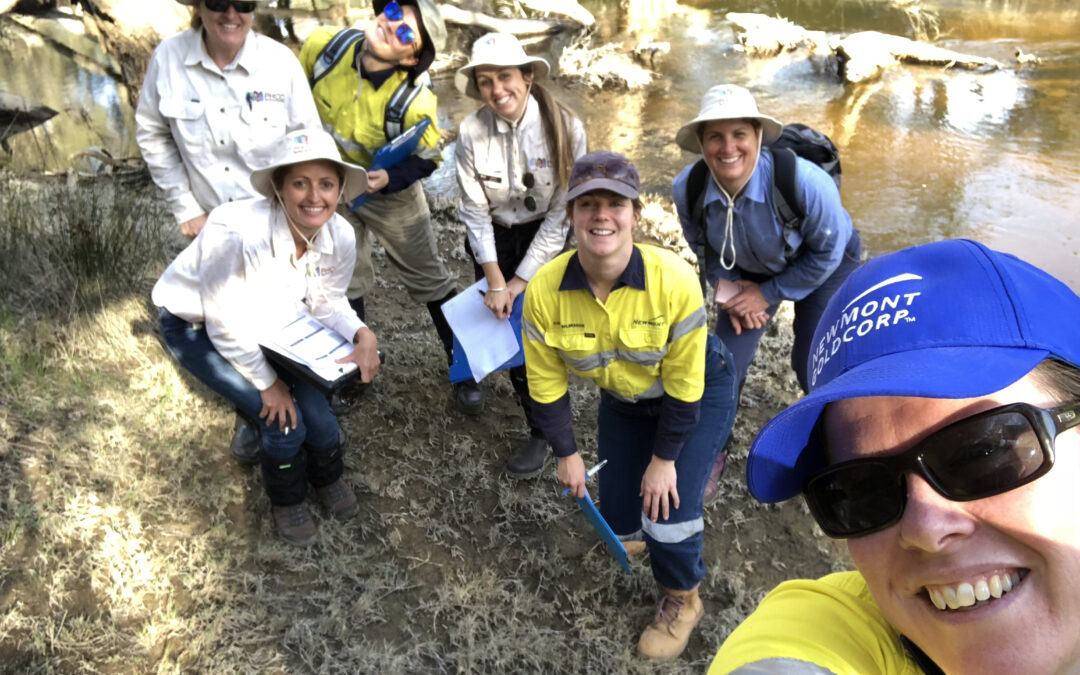
Building on a long-standing relationship, Newmont Boddington Gold (NBG) and the Peel-Harvey Catchment Council (PHCC) have formalised a five-year delivery agreement that is being recognised Nationally and Internationally, contributing to the United Nations “Clean Water and Sanitation” Sustainable Development Goal (refer to Minerals Council of Australia & Cardno (2018): Sustainable Development Goals — Sustainability in Action — Australian Mining and the United Nations Sustainable Development Goals here).
The Hotham-Williams Rivers & Tributaries’ Natural Resource Management (NRM) and Conservation Project focuses on the critical issue of catchment management in the fragile Peel-Harvey Catchment, enabling a long term, coordinated approach to improving river health, reducing threats to waterways and surrounding land and building community capacity for future land management.
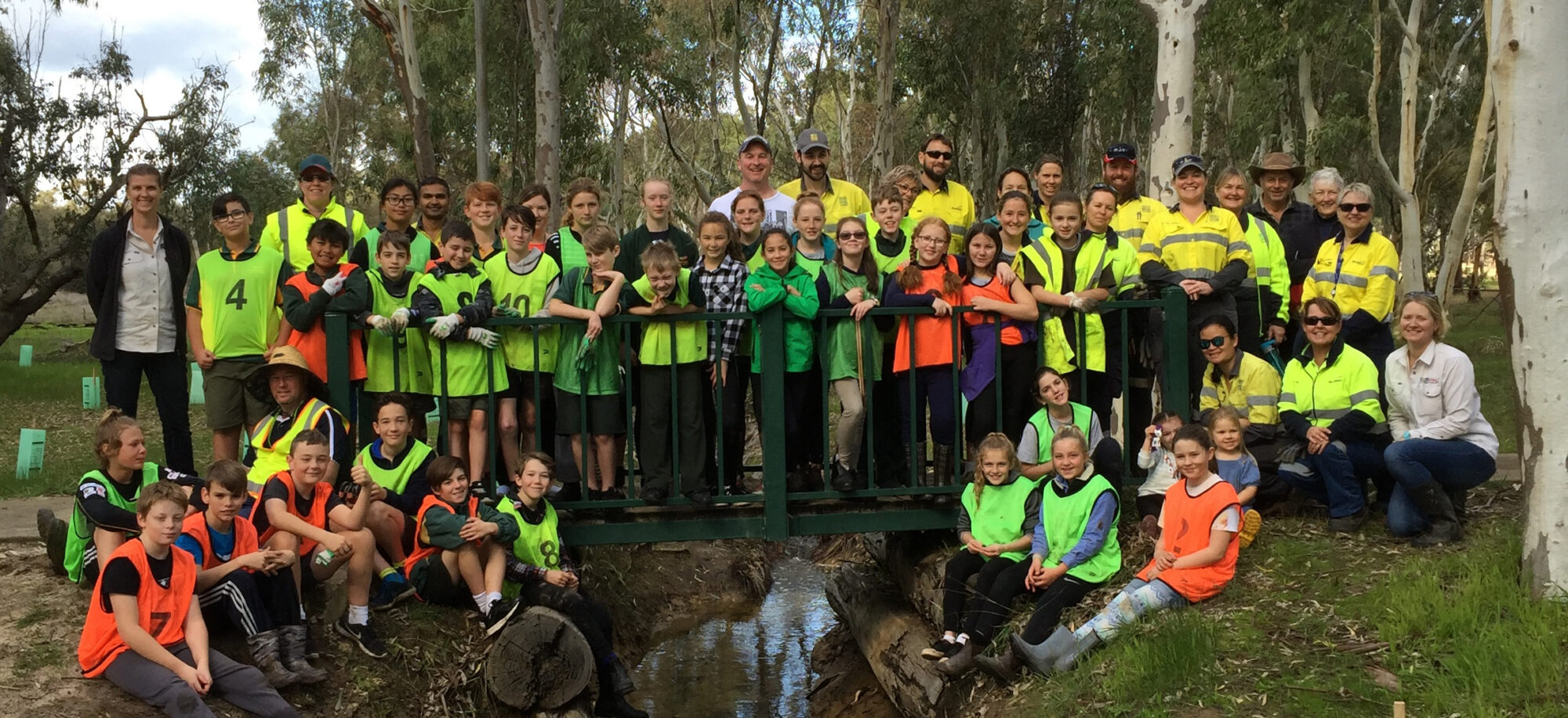
To date, the partnership has enabled a range of on-ground and catchment-wide activities as well as local direct and indirect employment. Landowners, local schools and representatives from the local Noongar community, industry and government have participated in catchment strategic planning and restoration activities including planting, weed and feral animal control that benefit both agriculture and the natural environment.
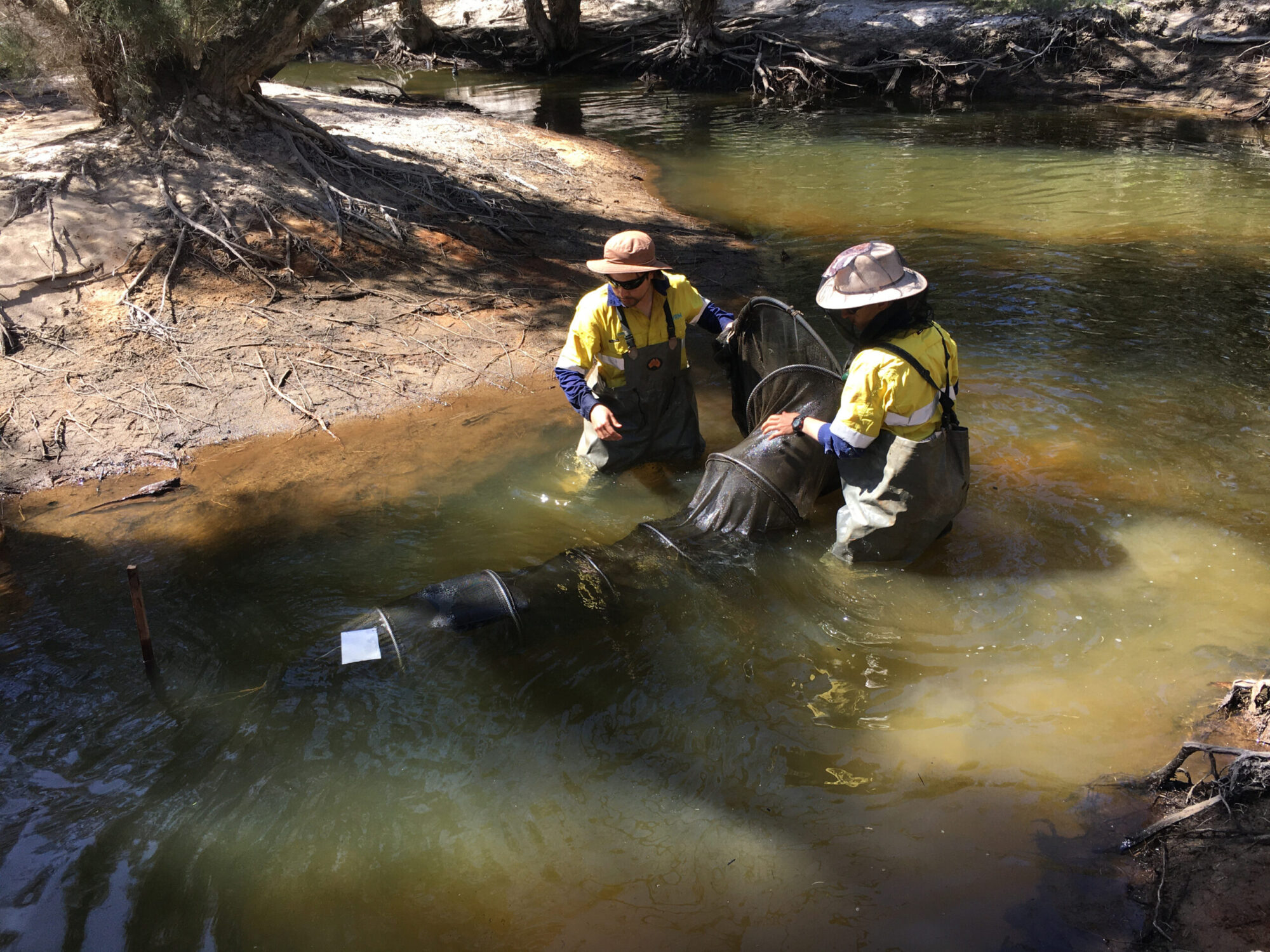
A River Action Plan (RAP) has been prepared in partnership with Urbaqua, and River Health Assessments undertaken at several locations.
Delivery of the agreement is now into its third year and, under the leadership of Melanie Durack (PHCC’s Program Manager for the Hotham-Williams) it is going from strength to strength, including being a finalist in the 2020 Department of Mines, Industry Regulation and Safety (WA) Community Partnership Resource Sector Award (refer to http://dmp.wa.gov.au/News/Resources-sector-projects-apply-27292.aspx) and attracting interest from other parties to contribute to NRM works prioritised by the Hotham Williams community.
A new phase of collaboration: the Newmont Boddington GoldPHCC Community Investment Agreement.
Specifically the partnership is supporting: ∙
- Employment of an NRM officer to oversee implementation of activities in the HothamWilliams Catchment. ∙
- Development of a RAP for the Hotham and Williams Rivers and tributaries addressing natural, conservation and cultural resource management knowledge gaps. The plan will capture Aboriginal cultural perspectives and outline recommendations to inform potential research opportunities and on-ground actions. ∙
- Collaboration with Noongar elders and community members to incorporate traditional ecological knowledge into catchment planning. ∙
- Delivery and support of biosecurity activities, including education and training of local community groups and landholders. ∙
- Building community capacity for future land management, including conservation workshops, accredited skills development courses for landholders and Aboriginal stakeholders and local community planting events focused on priority catchment areas.
- Restoration projects for the Hotham and Williams Rivers and tributaries including invasive weed control, riparian vegetation and community planting days; and ∙
- Development and delivery of a landowner grants program to support sustainable agricultural activities and protection of natural assets across the catchment.
Local Government Support
The Shires of Boddington, Cuballing, Wandering and Williams are also playing an important role in the partnership and have all entered into a collaborative MoU with the PHCC which delivers an investment of up to $40,000 per year to build the community’s landcare capacity (subject to annual budget approvals).
Global Sustainable Development Goals
Adopted in 2015, the United Nations Sustainable Development Goals (SDGs) are 17 ambitious and integrated global goals to achieve progress across the three dimensions of sustainable development: economic prosperity, social inclusion and environmental conservation.
Newmont’s partnership with the PHCC supports Goal 6: Clean Water and Sanitation (see Table), in particular the indicator to support and strengthen the participation of local communities in improving water and sanitation management. The partnership enables Newmont to support its catchment communities across Boddington, Wandering, Williams and Dwellingup and related localities to develop and implement a water management approach that is community-owned, championed and delivered by them.
Clean water and Sanitation
| Working together for healthy water systems | SDG6 — Clean water and sanitation | Enduring Value Principles |
| Newmont’s partnership with the Peel-Harvey Catchment Council will support improved water quality within the catchment while also supporting integration of local traditional knowledge into water management practices, sustainable agricultural practices and regional capacity building. | · Expected outcomes: • Restoration and improvement of the Peel-Harvey Catchment, enhancing water quality and supporting biodiversity
· Incorporation of traditional local knowledge into catchment planning, improved water management practices and promotion of Indigenous knowledge · Strengthened community capacity for future land management activities |
EV2: Integrate sustainable development principles into company policies and practices EV6: Seek continual improvement of our environmental performance EV7: Contribute to conservation of biodiversity and integrated approaches to land use planning EV9: Contribute to the social, economic and institutional development of the communities in which we operate |
Peel-Harvey surface water catchment
The Peel-Harvey Catchment is a 1.12 million hectare area covering the entire surface water catchment of the Peel-Harvey estuarine system. The Hotham-Williams is the upper portion of the Peel-Harvey surface water Catchment and makes up almost half of the Peel-Harvey Catchment.
Newmont Boddington Gold
Newmont Boddington Gold is the largest operating gold mine in Australia, employing approximately 1,850 employees and contractors. Located 16 kilometres from Boddington, NBG sits approximately in the centre of the Peel-Harvey Catchment. The Boddington Mine was established shortly after gold was discovered at the site in 1980.
Newmont is one of the largest custodians of land in the South West of Western Australia with an operational footprint of 5,000 hectares and landholdings of approximately 30,000 hectares of native forest, plantation and agricultural land.
Under its operating licence, NBG is able to extract and store up to 15 gigalitres of water per annum from the Hotham River, subject to water flow limits and results of ongoing ecosystem health monitoring.
Peel-Harvey Catchment Council
PHCC is a not-for-profit, community-based NRM organisation promoting an integrated approach to catchment management within the Peel-Harvey catchment. With a strong emphasis on partnerships, PHCC works with landholders, community groups, industry and all levels of government to enhance environmental management.
PHCC’s activities address sustainable NRM including climate change, river and wetland restoration, biodiversity protection, sustainable agriculture and building community capacity (refer to Peel-Harvey Catchment Council, What we Do, PHCC, viewed 2 October 2018)..
Background to the Newmont Boddington Gold — Peel-Harvey Catchment Council Partnership
NBG and PHCC began working together in 2011 as members of the Hotham-Williams Catchment Environmental Alliance (HWCEA), a community group focused on catchment-level responses. Membership of HWCEA included a broad range of stakeholders: local Landcare groups, resource sector companies, Traditional Owners, environmental organisations, local government representatives, local schools, universities and community members.
After many years of strong support and community-level projects, public investment in Landcare in the Hotham-Williams Catchment declined. With support, the PHCC prepared a business case and a NRM Strategy for the Hotham Williams and subsequently secured funding to employ a dedicated officer to work in the upper catchment. These initial projects delivered considerable outcomes and reinforced the importance of a strategic approach to identify and implement community priorities and maintain a NRM presence in the community.
The success of the NBG and PHCC relationship is built on the mutually supportive collaboration between the two organisations.
Fast forward to 2020 and the PHCC now has four local professionals working from the Boddington Community Resource Centre. The consistent local presence has enabled the PHCC to build local capacity amongst committed NRM stakeholder groups to build a coalition of community support for continued NRM. NRM and Landcare is now, once again firmly part of the Hotham Williams community.
For more information click here
This article was first published in the Peel Magazine, Spring/Summer 2020 – vol 6.1 – download the full magazine click here