

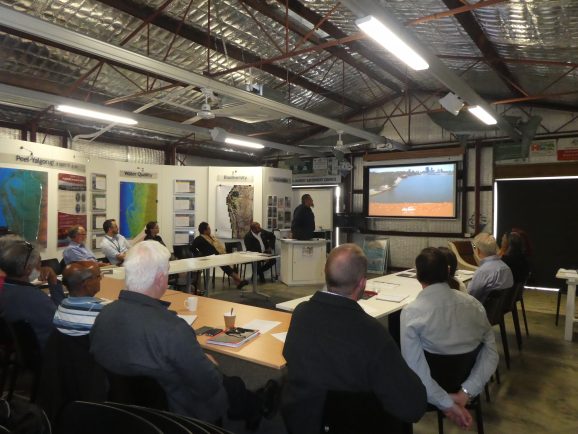
 The WA Department of Biodiversity Conservation and Attractions (DBCA) encourages Traditional Custodians who wish to conduct Aboriginal cultural events in WA’s national parks to apply and to become local tourism operators. DBCA is welcoming Aboriginal people to share with and educate the community about their values and their culture to increase the level of public knowledge of this culture. DBCA’s presentation addressed the process that is to be followed for registration for a commercial operations license in events, tourism and education.
Robert Taylor the CEO of the Western Australian Indigenous Tourism Operators Council ( WAITOC) focused on the ways that WAITOC could assist Aboriginal businesses with marketing strategies particularly social media marketing. He explained that there was a huge interest in both domestic and international tourists wishing to undertake cultural experiences such as bush tucker, storytelling and nature walks.
John Wilson from Indigenous Business Australia (IBA) explained that IBA offered workshops in building capacity and skills and also offered business support to Aboriginal businesses starting up and then becoming a viable business. IBA approach was to partner with Aboriginal people to achieve economic independence through investments and asset and funds management. IBA also can help Aboriginal families buy their first home through the provision of home loans with low deposit requirements and flexible interest rates and with no mortgage insurance required.
Colin Slattery from the Indigenous Land and Sea Corporation (ILSC) spoke of the Our Country Our Future national funding program which offers assistance to those Aboriginal people or businesses that are proposing projects, via strategies such as brokering, developing partnerships, facilitating and coordinating support and even providing funding assistance. The five broad focus areas are; conservation and healthy country, urban investment, tourism, niche indigenous products and agribusiness.
Ramu Naidoo spoke about the birth of a new agency as from the 1 July 2019 the National Indigenous Australians Agency (NIAA), and the formation of a new Aboriginal Business hub in 2020 in Perth. Some of the key focus areas of the NIAA included; closing the gap, constitutional recognition, grants and funding and economic development.
Following the workshop there was the Aboriginal Business Tourism Think Tank Meeting which focused on discussing strategies to expand Aboriginal tourism businesses in the Peel area. Discussed were topics such as where we are now, what issues existed, opportunities already identified and the best way forward to explore future opportunities.
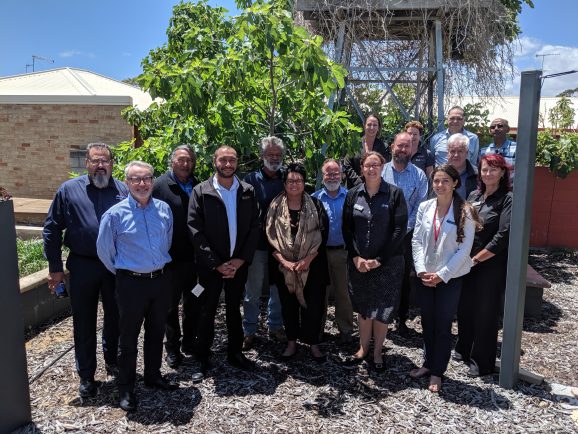
The Culture in the Parks workshop was a collaboration between various agencies; Peel Development Commission, Peel Harvey Catchment Council, Department of Biodiversity Conservation and Attractions, Western Australian Indigenous Tourism Operators Council, Indigenous Business Australia, Indigenous Land and Sea Corporation and National Indigenous Australians Agency.